
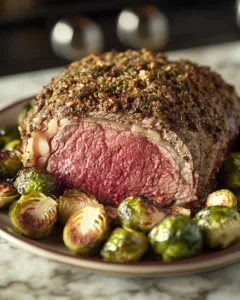
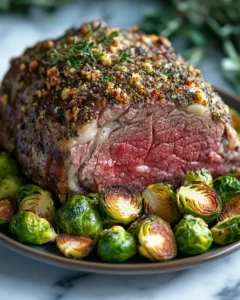
Few meals evoke the feeling of celebration and warmth quite like a perfectly cooked prime rib. Imagine a cozy evening where the house is filled with the comforting aroma of garlic, fresh herbs, and roasting beef, paired with caramelized Brussels sprouts that are crisp on the outside and tender on the inside. This Horseradish-Crusted Prime Rib with Roasted Brussels Sprouts is not only a showstopper for holiday gatherings or family dinners, but it also brings a touch of elegance to any occasion.
The inspiration for this recipe comes from traditional holiday feasts, where prime rib often takes center stage. I wanted to create a dish that balances rich, succulent beef with the subtle spice of horseradish and the earthy sweetness of roasted Brussels sprouts. The combination ensures every bite is layered with flavor and makes your dinner table irresistible. Whether you’re preparing a special meal for loved ones or simply treating yourself to something extraordinary, this recipe promises both comfort and sophistication.
Ingredients
For the Prime Rib
-
1 (4–6 lb) bone-in prime rib roast, preferably USDA Choice or Prime
-
3 tablespoons Dijon mustard
-
3 tablespoons prepared horseradish
-
4 cloves garlic, minced
-
2 tablespoons fresh rosemary, chopped
-
2 tablespoons fresh thyme, chopped
-
2 teaspoons salt
-
1 teaspoon black pepper
-
2 tablespoons olive oil
For the Roasted Brussels Sprouts
-
1 ½ lb Brussels sprouts, trimmed and halved
-
3 tablespoons olive oil
-
1 teaspoon salt
-
½ teaspoon black pepper
-
1 teaspoon garlic powder
-
Optional: 2 tablespoons grated Parmesan cheese for finishing
Directions
Preparing the Prime Rib
-
Preheat the oven to 450°F (230°C). Place a rack in a roasting pan.
-
Mix the horseradish coating: In a small bowl, combine Dijon mustard, prepared horseradish, minced garlic, chopped rosemary, chopped thyme, salt, black pepper, and olive oil. Stir until smooth.
-
Prepare the roast: Pat the prime rib dry with paper towels. Rub the horseradish mixture evenly over the entire surface of the meat. Let it sit at room temperature for 30–45 minutes to allow flavors to penetrate and ensure even roasting.
-
Roast the prime rib: Place the roast bone-side down on the rack in the roasting pan. Roast in the preheated oven for 15 minutes to create a flavorful crust.
-
Lower the heat: Reduce oven temperature to 325°F (165°C) and continue roasting until the internal temperature reaches your desired doneness:
-
Rare: 120–125°F (49–52°C)
-
Medium-rare: 130–135°F (54–57°C)
-
Medium: 140–145°F (60–63°C)
Use a meat thermometer inserted into the thickest part of the roast.
-
-
Rest the roast: Remove from oven and tent loosely with foil. Let the meat rest for at least 20 minutes. This allows juices to redistribute and ensures a tender, juicy prime rib.
Preparing the Brussels Sprouts
-
Preheat oven to 400°F (200°C) if not already roasting the prime rib.
-
Toss Brussels sprouts: In a large bowl, combine halved Brussels sprouts, olive oil, salt, black pepper, and garlic powder. Toss until evenly coated.
-
Roast: Spread Brussels sprouts on a baking sheet in a single layer. Roast for 20–25 minutes, stirring halfway through, until golden brown and crispy on the edges.
-
Optional finishing: Sprinkle with grated Parmesan cheese just before serving for an extra layer of flavor.
Serving
-
Slice the rested prime rib against the grain into ½-inch thick slices.
-
Arrange the slices on a serving platter alongside the roasted Brussels sprouts.
-
Serve with your favorite side dishes, such as creamy mashed potatoes or a fresh green salad, to complete the meal.
Tips for Perfect Prime Rib
-
Choose quality beef: Opt for a bone-in prime rib for the best flavor and juiciness. USDA Choice or Prime grades work well.
-
Room temperature meat: Allowing the roast to sit at room temperature before cooking ensures even cooking throughout.
-
Thermometer is key: Rely on an instant-read thermometer rather than guesswork. It guarantees your roast hits the perfect doneness every time.
-
Resting is essential: Don’t skip this step—resting the meat locks in juices and prevents a dry roast.
Flavor Variations
-
Garlic and Herb: Add extra fresh herbs like oregano or sage to the horseradish crust for a fragrant twist.
-
Spicy Kick: Mix in ½ teaspoon cayenne pepper to the horseradish rub for those who enjoy heat.
-
Citrus Zest: Add a teaspoon of lemon or orange zest to the rub for a subtle, bright flavor contrast.
Pairing Suggestions
-
Side Dishes: Creamy mashed potatoes, roasted root vegetables, or a simple arugula salad.
-
Sauces: Horseradish cream sauce or a tangy mustard sauce pairs beautifully.
-
Beverages: Opt for sparkling water with a slice of citrus, a fresh iced tea, or a non-alcoholic fruit spritzer for a complete dining experience.
Why Horseradish Works So Well
Horseradish adds a bold, zesty flavor that perfectly balances the richness of prime rib. Its subtle heat enhances the natural flavor of the beef without overpowering it. When combined with garlic, rosemary, and thyme, the result is a crust that is both flavorful and aromatic. This simple yet elegant touch elevates your prime rib from ordinary to extraordinary.
Making Brussels Sprouts Irresistible
Many people shy away from Brussels sprouts, but roasting them transforms these little green vegetables into something everyone will love. High heat caramelizes their natural sugars, creating a nutty, slightly sweet flavor that pairs perfectly with the savory, spicy notes of the prime rib. A touch of garlic powder and optional Parmesan makes them even more irresistible, encouraging even the pickiest eaters to enjoy this side.
Serving Tips for a Memorable Meal
-
Presentation Matters: Slice the roast just before serving and fan the slices on a large platter. Place Brussels sprouts on either side for an inviting look.
-
Garnish: Fresh rosemary sprigs or a sprinkle of chopped parsley add a touch of elegance.
-
Timing: Serve immediately after resting the meat and finishing the Brussels sprouts for optimal texture and flavor.
Storage and Leftovers
-
Refrigeration: Store any leftover prime rib tightly wrapped in foil or in an airtight container in the refrigerator for up to 4 days.
-
Reheating: Reheat slices gently in a 300°F (150°C) oven, covered with foil, to avoid drying out the meat.
-
Brussels Sprouts: Leftover roasted Brussels sprouts can be reheated in a skillet with a drizzle of olive oil to crisp them up again.
Why You’ll Love This Recipe
This Horseradish-Crusted Prime Rib with Roasted Brussels Sprouts is perfect for anyone looking to impress family or friends with minimal stress. The combination of tender, juicy beef with a flavorful crust and caramelized Brussels sprouts creates a meal that is both comforting and sophisticated. It works beautifully for festive holidays, special birthdays, or any time you want to make dinner feel extraordinary.
Every element—from the zesty horseradish to the aromatic herbs and crisp vegetables—is designed to create a balance of flavors that excite the palate. Even if you’re not usually a fan of Brussels sprouts, roasting them this way transforms them into a side dish that pairs seamlessly with the richness of the prime rib.
Whether you’re hosting a formal dinner or enjoying a cozy evening at home, this recipe is sure to become a favorite. With a little preparation and attention to detail, you can create a meal that looks as impressive as it tastes—without complicated techniques or hard-to-find ingredients.
Prep Time: 20 minutes (plus 30–45 minutes for resting at room temperature)
Cook Time: 1 hour 45 minutes to 2 hours 15 minutes (depending on roast size and desired doneness)
Total Time: 2 hours 15 minutes to 2 hours 50 minutes
Yield: Serves 6–8
Notes:
-
Always allow meat to rest after roasting to retain juices.
-
Adjust roasting times based on the size of your prime rib.
-
Brussels sprouts can be roasted alongside the prime rib if oven space allows, adjusting temperature and timing slightly.
-
For extra flavor, try brushing a little of the pan drippings over the sliced meat before serving.
Frequently Asked Questions
1. Can I prepare the prime rib in advance?
Yes! One of the great benefits of this recipe is that you can prepare the horseradish crust and coat the prime rib up to a full day ahead of time. After applying the mixture of horseradish, Dijon mustard, garlic, and fresh herbs, tightly wrap the roast in plastic wrap or place it in an airtight container and refrigerate. When you’re ready to cook, remove it from the fridge and allow it to come to room temperature for 30–45 minutes. This step ensures that the meat cooks evenly and helps the flavors of the crust fully penetrate the roast. Preparing in advance is not only a time-saver on the day of your dinner but also enhances the overall flavor, giving the roast a more deeply infused taste. It’s especially helpful for busy holiday meals or when hosting guests, allowing you to focus on other sides and final touches rather than rushing the main course.
2. How do I ensure my prime rib is cooked perfectly?
The most reliable way to achieve perfect doneness is by using an instant-read thermometer. Insert it into the thickest part of the roast without touching the bone, which can give inaccurate readings. Keep in mind that the meat continues to cook slightly after being removed from the oven, so it’s best to pull it a few degrees below your desired temperature. For example, aim for 130–135°F for medium-rare. Additionally, let the roast rest for at least 20 minutes under a loose foil tent. This allows the juices to redistribute evenly throughout the meat, resulting in tender, juicy slices. Following these steps removes the guesswork and ensures that every slice is cooked exactly the way you like it.
3. Can I make this recipe without a bone-in roast?
Absolutely. While a bone-in prime rib naturally adds extra flavor and helps retain moisture during cooking, a boneless roast works just as well. When using a boneless roast, adjust the cooking time slightly since it may cook a bit faster than bone-in. Always rely on a thermometer to avoid overcooking. The horseradish crust will still develop a flavorful, golden exterior that seals in the juices, providing the same succulent taste and impressive presentation.
4. What can I do if I don’t like horseradish?
If horseradish isn’t to your taste, don’t worry! You can simply substitute Dijon mustard alone, or combine it with garlic, rosemary, and thyme for a milder but equally delicious crust. The goal is to create a flavorful exterior that enhances the roast’s natural taste without overwhelming it. Even without horseradish, the roast will develop a beautiful golden crust and remain tender, juicy, and full of savory flavor that everyone will enjoy.
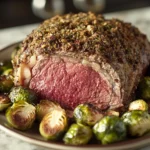
Horseradish-Crusted Prime Rib with Roasted Brussels Sprouts Everyone Will Love
- Total Time: 2 hours 15 minutes to 2 hours 50 minutes
- Yield: 6-8 servings 1x
Description
Few meals feel as celebratory and comforting as a perfectly roasted prime rib. This Horseradish-Crusted Prime Rib with Roasted Brussels Sprouts combines tender, juicy beef with a flavorful horseradish and herb crust and caramelized Brussels sprouts for a meal everyone will love. Perfect for festive holidays, special occasions, or a cozy family dinner, this dish delivers a show-stopping centerpiece that’s as impressive as it is delicious.
Ingredients
For the Prime Rib
-
1 (4–6 lb) bone-in prime rib roast, preferably USDA Choice or Prime
-
3 tablespoons Dijon mustard
-
3 tablespoons prepared horseradish
-
4 cloves garlic, minced
-
2 tablespoons fresh rosemary, chopped
-
2 tablespoons fresh thyme, chopped
-
2 teaspoons salt
-
1 teaspoon black pepper
-
2 tablespoons olive oil
For the Roasted Brussels Sprouts
-
1 ½ lb Brussels sprouts, trimmed and halved
-
3 tablespoons olive oil
-
1 teaspoon salt
-
½ teaspoon black pepper
-
1 teaspoon garlic powder
-
Optional: 2 tablespoons grated Parmesan cheese
Instructions
-
Preheat the oven to 450°F (230°C) and place a rack in a roasting pan.
-
In a small bowl, combine Dijon mustard, prepared horseradish, minced garlic, rosemary, thyme, salt, black pepper, and olive oil. Stir until smooth.
-
Pat the prime rib dry and rub the horseradish mixture evenly over the meat. Let it sit at room temperature for 30–45 minutes.
-
Place the roast bone-side down on the rack and roast for 15 minutes to create a crust.
-
Reduce the oven temperature to 325°F (165°C) and continue roasting until the internal temperature reaches desired doneness: Rare 120–125°F, Medium-rare 130–135°F, Medium 140–145°F.
-
Remove roast from oven, tent loosely with foil, and rest for at least 20 minutes.
-
Preheat oven to 400°F (200°C) if needed for Brussels sprouts.
-
Toss halved Brussels sprouts with olive oil, salt, pepper, and garlic powder. Spread on a baking sheet and roast for 20–25 minutes, stirring halfway through, until golden and crisp. Optionally, sprinkle with Parmesan before serving.
-
Slice the rested prime rib against the grain and serve with roasted Brussels sprouts.
Notes
-
Allow meat to rest after roasting to retain juices.
-
Adjust roasting times depending on the size of the prime rib.
-
Brussels sprouts can be roasted alongside the prime rib if oven space allows.
-
Brush pan drippings over sliced meat for extra flavor.
- Prep Time: 20 minutes (plus 30–45 minutes resting)
- Cook Time: 1 hour 45 minutes to 2 hours 15 minutes